
Piney Branch Tunnel
DC Water’s Piney Branch Tunnel
Piney Branch Tunnel overview
Piney Branch Tunnel Project
DC Water is building the Piney Branch Tunnel Project in Rock Creek Park in northwest Washington, DC. The tunnel will help keep combined wastewater and stormwater in the sewer system from overflowing into Piney Branch during heavy rains.
Today, about 40 million gallons of untreated water is discharged into Piney Branch in a typical year. This can harm the stream and local wildlife. The tunnel will reduce these overflows by about 96% and lower the number of overflow events from about 25 to just one in a typical year.
Piney Branch Tunnel is one of six tunnels that make up DC Water’s Clean Rivers Project to improve water quality in Piney Branch, Rock Creek, the Potomac River and Chesapeake Bay by reducing the amount of untreated water released during storms. Construction is expected to be complete in 2029.
The project is part of a 2005 Federal Consent Decree entered into by DC Water, the District, US Environmental Protection Agency, and US Department of Justice, as amended January 2016, and modified December 2020.
For more information view the project factsheet.
Project Updates
Piney Branch Tunnel Groundbreaking, Final Phase of Clean Rivers Project
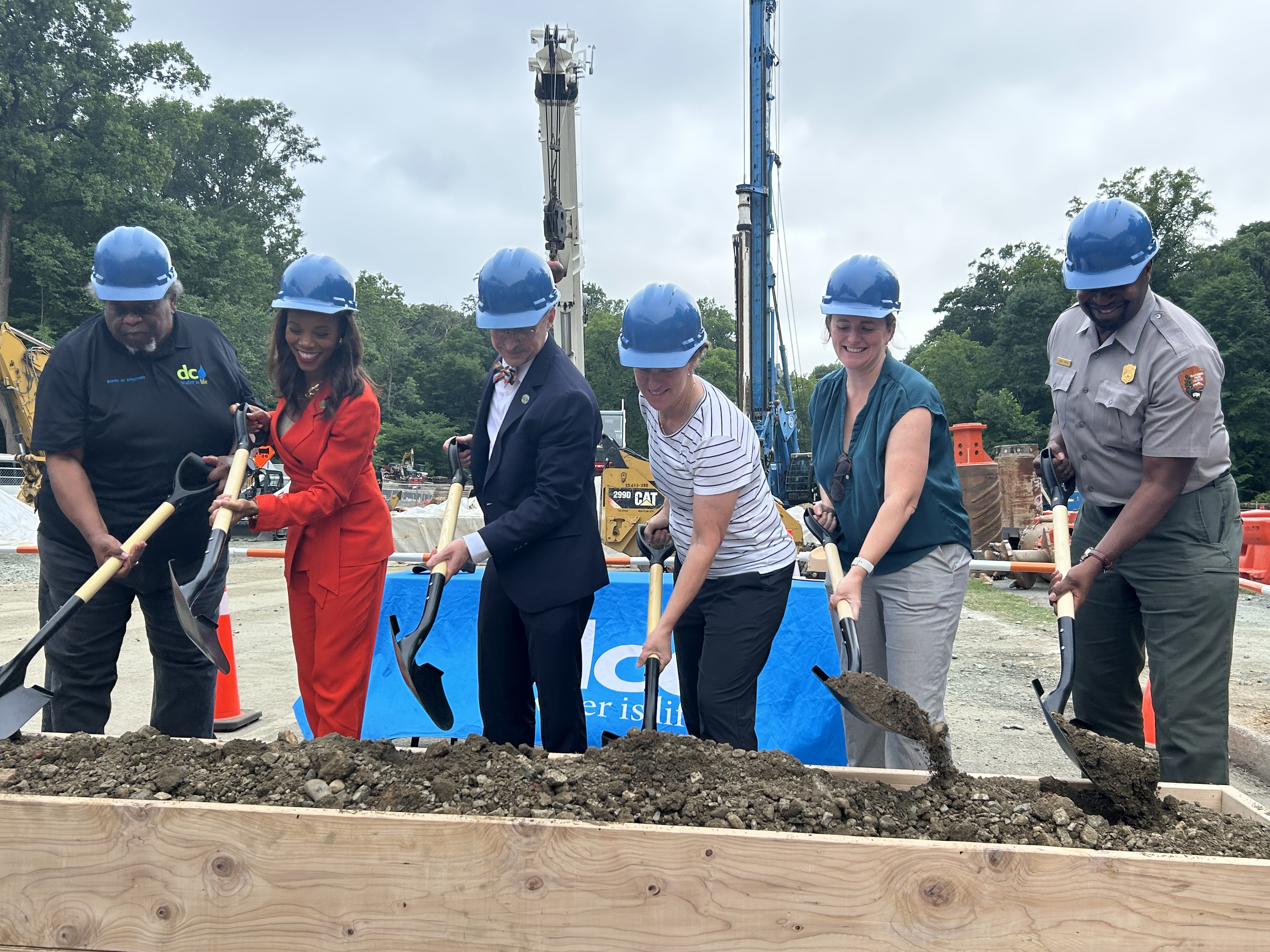
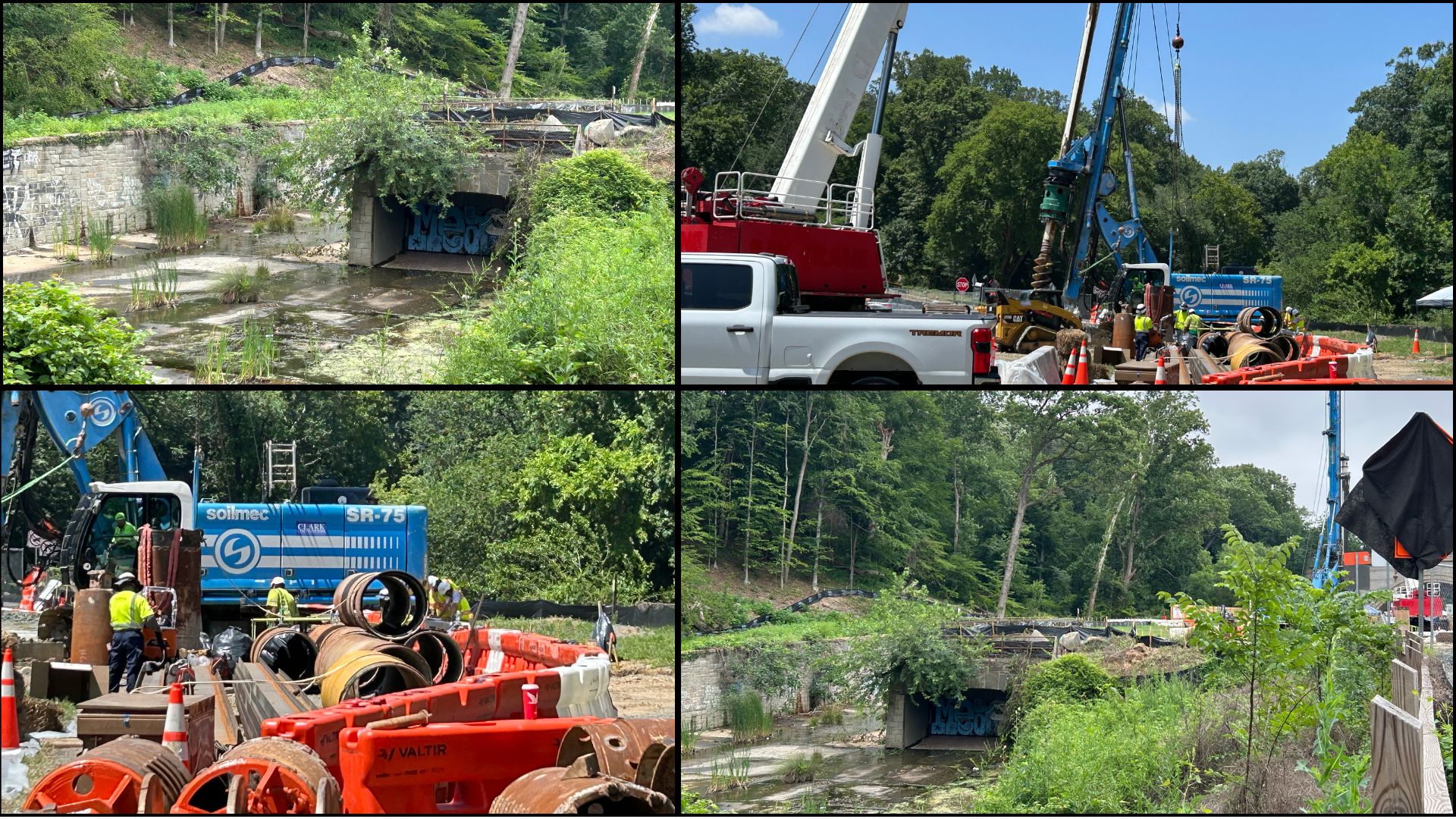
On July 9 2026, DC Water broke ground on the Piney Branch Tunnel, the final major tunnel in our Clean Rivers Project. Over the summer, our crews will prepare the site before tunneling starts later in the fall. This will involve digging through rock, including planned blasting.
DC Water officials were joined at the event by local elected officials, DC Water board members, and the community to celebrate this milestone.
"We have already seen how the Clean Rivers Project can make a real difference for the Anacostia River, and this project will bring those same benefits to Rock Creek and the Potomac River,” said DC Water Interim Chief Executive Officer and General Manager Matt Brown. “The Piney Branch Tunnel is one more way we are protecting our waterways and building a cleaner, healthier future for everyone who lives, works and enjoys the outdoors in DC.”
Read Full News Release here
Project Details
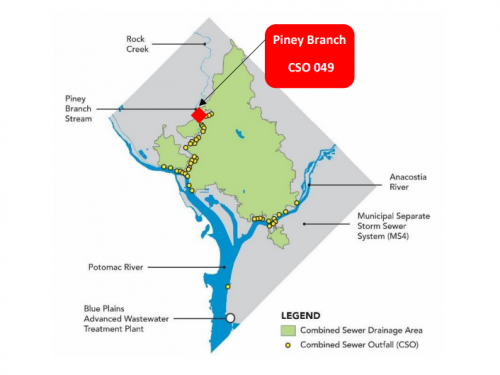
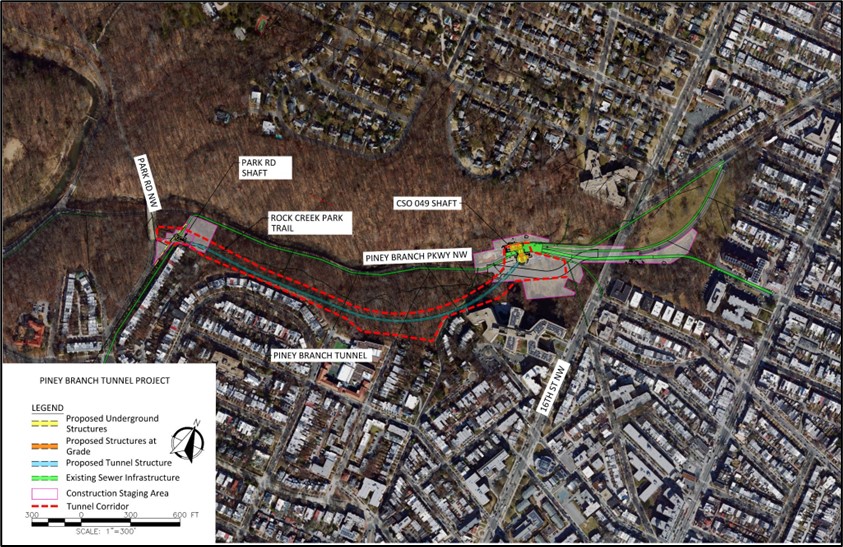
During heavy storms, the untreated water overflows into Piney Branch near 17th Street NW. It’s here that DC Water will build a structure that will capture and redirect the water into the tunnel system instead of going into the stream. A second structure is also being built near Park Road NW. These structures will store the water during storms and send it to the Blue Plains Advanced Wastewater Treatment Plant to be treated once the system can handle it.
🛠️ Work: Construction of Piney Branch Tunnel to reduce combined wastewater and stormwater overflows and improve water quality.
📍 Location: Piney Branch Parkway, between 16th Street NW and Park Rd NW
📅 Timeline: Mobilization and Pre-Construction Activity - Fall 2025; Tunnel Construction - Summer 2026 - 2029
📏 Project length: 1/2 mile
⭕ Tunnel size: 22-feet in diameter
⏰ Typical work hours: 7 a.m. to 5 p.m.
🚧 Traffic impacts: Expect construction delays along Piney Branch Parkway between 16th Street NW and Park Rd NW. Follow the instruction of flaggers who will be directing traffic in and around the work zone.
Environmental Assessment (EA) and Finding of No Significant Impact (FONSI)
DC Water and the National Park Service (NPS) prepared an Environmental Assessment (EA) to comply with the National Environmental Policy Act (NEPA). The EA analyzed and evaluated potential environmental impacts associated with the project. NPS also elicited public comments on the EA. NPS considered two alternatives in the EA, a no-action alternative and a proposed action alternative, the construction of the Piney Branch Tunnel.
Following extensive review, the National Park Service (NPS) approved DC Water’s proposal to construct the Piney Branch Tunnel on NPS land in Rock Creek Park. A Finding of No Significant Impact (FONSI) was signed on March 5, 2025, selecting the construction of the Piney Branch Tunnel. The FONSI describes the rationale for the decision and outlines measures that will be taken to avoid, minimize and mitigate any impacts. For details read the Environmental Assessment and Finding of No Significant Impact.





Stay connected with us through these convenient options: