DC Water Releases Plan to Remove All Lead Service Lines in the District by 2030
June 07, 2021
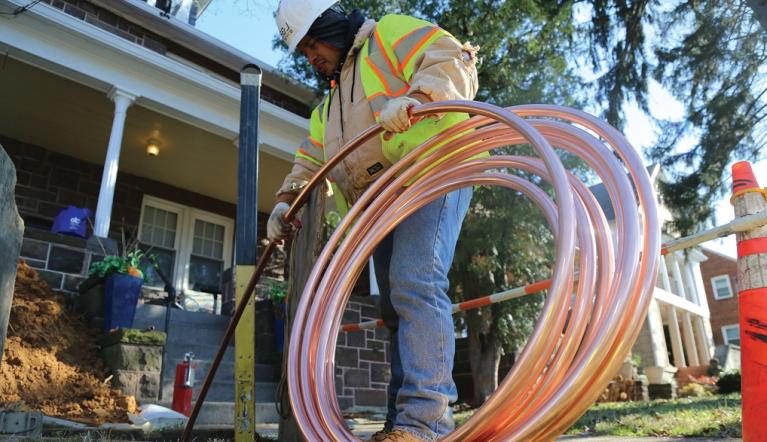
Photo of a worker installing copper pipe

Today, DC Water released the Authority’s Lead Service Line Replacement Plan, an ambitious and robust plan to remove all lead service lines in the District of Columbia by 2030. The plan combines DC Water’s existing programs utilized to removed lead service lines (LSL) in the District into one coordinated effort that prioritizes lead replacements for vulnerable populations most impacted by lead exposure (e.g. children and pregnant women), and communities that are historically underserved and experience disproportionately poorer health outcomes compared with other parts of the city.

Developing and executing the plan is a top priority of DC Water Chief Executive Officer and General Manager David L. Gadis. “Achieving the Lead Free DC vision requires a comprehensive, nuanced plan that not only improves on what we do today, but also details what would be required from us, the city, and our customers to accelerate replacement efforts, and to do it in a way that incorporates water quality and customer equity needs,” said Mr. Gadis.

The plan includes removal of the known lead service lines, as well as the remaining work needed to identify all of the lead pipes on public and private property in the District. The plan also details the model based on water quality data and social equity factors that is being used to prioritize projects, along with the cost estimates to meet the 2030 timeline.
Mr. Gadis added, “We estimate an additional $300 million to $500 million will be needed to accomplish that goal, but Mayor Bowser has included funding in her proposed budget for lead service line removal and we are optimistic the Federal Government will also step up to help.”

Through this plan, DC Water is also recommending a host of policy and outreach initiatives necessary to accomplish the lead service line replacement goal by the end of the decade. 

Over the past few years, DC Water has taken significant steps to reduce lead in drinking water. These actions include monitoring for lead at the tap, controlling corrosion, replacing lead service pipes, educating customers on the health impacts of lead, and helping them identify and remove lead sources on their property. DC Water launched its Lead Free DC initiative in 2019 and has already made a significant impact by removing lead pipes from more than 1,000 homes, while leveraging District funding to save customers approximately $1,000,000 in replacement costs.

To read the Lead Service Line Replacement Plan, please visit dcwater.com/LeadFreeDCPlan

Latest News

Graphic inviting people to join the meeting Jan 28 6pm - 7pm

This week’s heavy snow, icy conditions, and extreme cold have brought challenges to the DC region —exactly the kind of weather that can impact how DC Water’s Lead Free DC Program replaces lead service lines. That’s why we’re reminding you to join us tomorrow, January 28, from 6 p.m. to 7 p.m., for an important Lead Free DC (LFDC) virtual community meeting.

Photo of equipment and workers manning the PI bypass return

DC Water teams and contractors are working around the clock to operate a bypass system that diverts wastewater away from a damaged section of the Potomac Interceptor. Industrial pumps have been running since late Saturday, but heavy snow and extreme cold continue to create challenges for the equipment and operations.

Photo of the Potomac Interceptor Bypass where overflow reentering the sewer line

DC Water is nearing full containment on a sanitary sewer overflow, nearly a week after a section of the Potomac Interceptor – a major sewer line – collapsed in Montgomery County, MD. In the first full day of operation since a temporary bypass system was activated, the flow of wastewater downstream where it re-enters the sewer line has increased by about 40 million gallons per day.

Upcoming Meeting

Board of Directors Meeting

April 24, 2023

Monday 9:00 AM

Announcement

Picture of new bike pedestrian path and traffic detour
New Path for Capital Crescent Trail Opens at Georgetown Waterfront Park

DC CLEAN RIVERS – POTOMAC RIVER TUNNEL PROJECT
If you bike, drive, or walk through Georgetown, we’ve got changes starting this week around the Potomac River Tunnel construction on Water Street NW. The Capital Crescent Trail has a new temporary detour through Georgetown Waterfront Park, open now for cyclists between 33rd and Potomac streets NW.

Latest Blog Post
A helicopter lowers a drill rig to workers on the Potomac River.
DC Water begins drilling in Potomac River to explore options to rehab underwater sewer line
When one of your major sewer lines runs through the Potomac River, a backhoe and trencher won't do. That's why we've got helicopters carrying a 14-ton drill and workers suspended midair over the Potomac.
Upcoming Meeting
Date
February 5, 2026
Thursday, 9:30 AM

Upcoming Events

Customer Service Center Announcement

Payment Plan Incentive: provides a credit back of 40% of the last 3 payments made and in the new fiscal year 50% will be credited. Eligible participants are residential customers who have had an outstanding balance for 60 days or greater and with an outstanding balance of $500 or more.